Detect
Detect abnormal process, file, network and memory activity using behavioral indicators and Aqua Nautilus threat intelligence to identify emerging threats, even those without known malware signatures.
Explore DetectCollect runtime telemetry and make policy decisions directly inside the workload, enabling teams to detect threats, enforce security policies, and contain attacks without relying on remote analysis.
Detect abnormal process, file, network and memory activity using behavioral indicators and Aqua Nautilus threat intelligence to identify emerging threats, even those without known malware signatures.
Explore DetectEnforce runtime policies deterministically across containers, VMs, serverless and AI workloads, applying the same policy locally across environments without depending on a continuous connection to a central system.
Explore EnforceCombine runtime telemetry, memory evidence, process lineage and MITRE ATT&CK mapping to show clearly how an attack unfolded and what it affected.
Explore ContainBlock the specific process, file, network or privilege action that violates policy, without making workload termination the default response. Runtime Policy Enforcement starts with out of the box policies you move from audit to enforcement as behavior is validated.
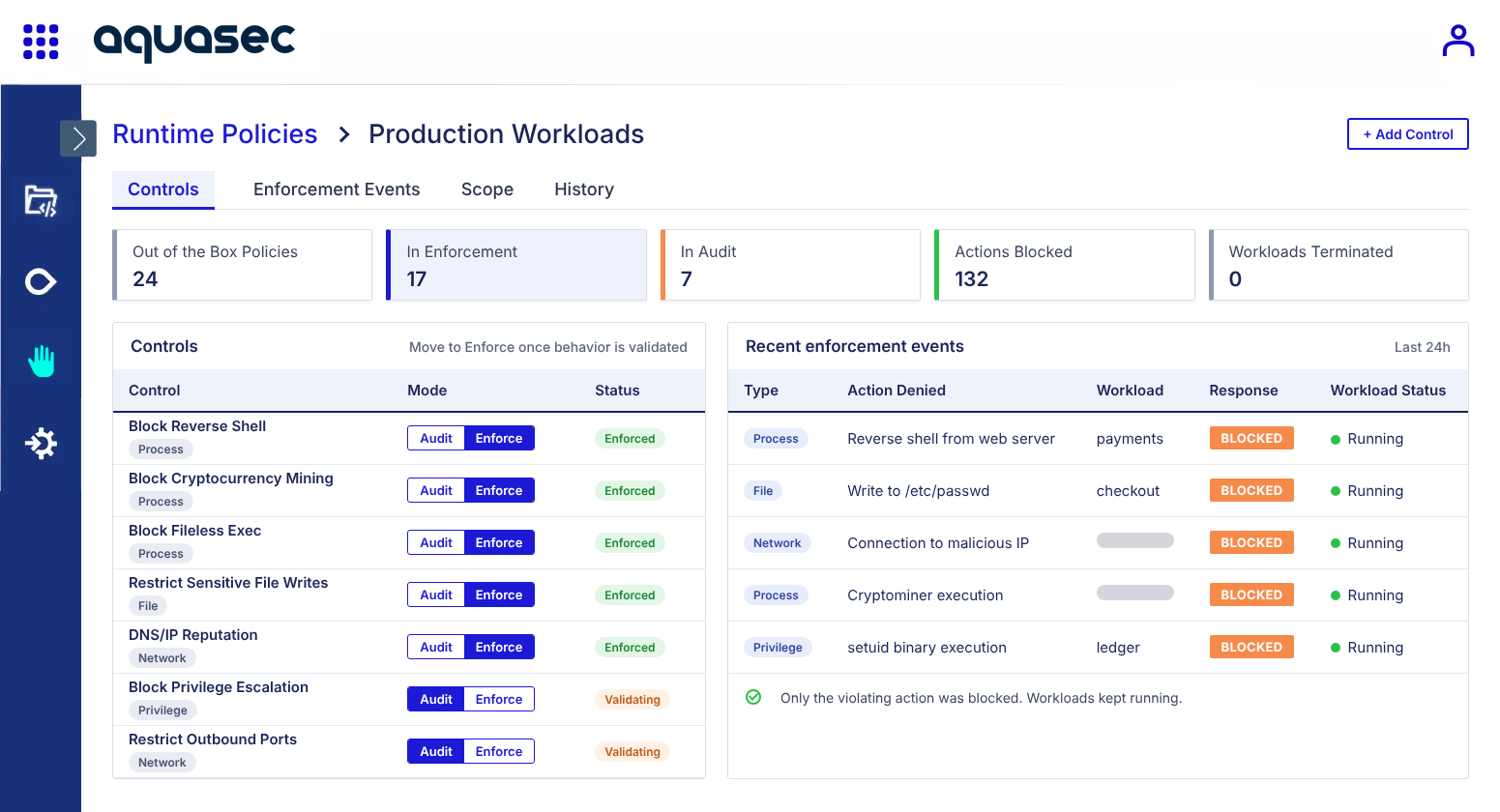
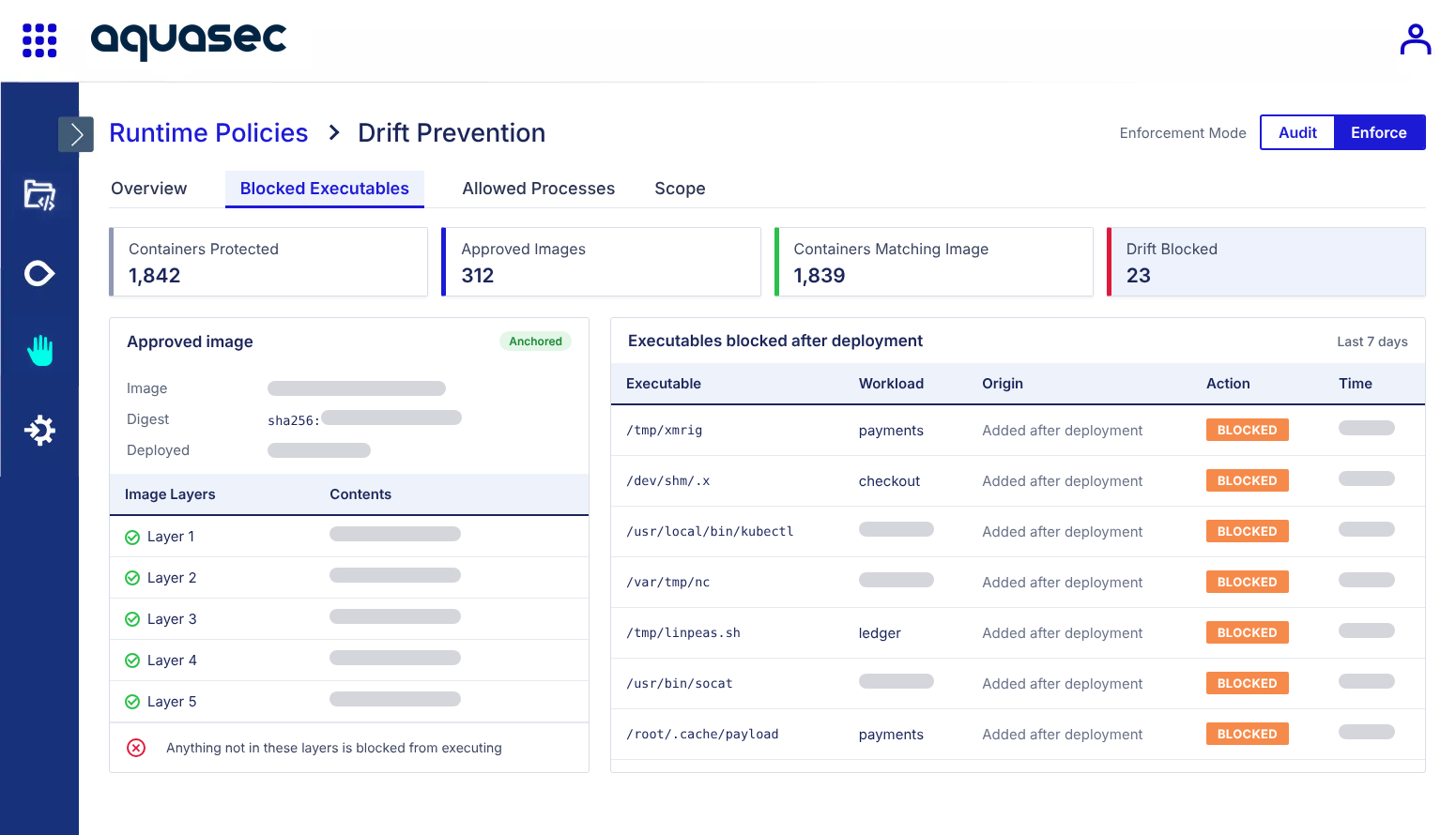
Stop unauthorized executables from running in your containers. Drift Prevention anchors each container to its approved image, so binaries added after deployment are blocked, including tools an attacker drops after an exploit.
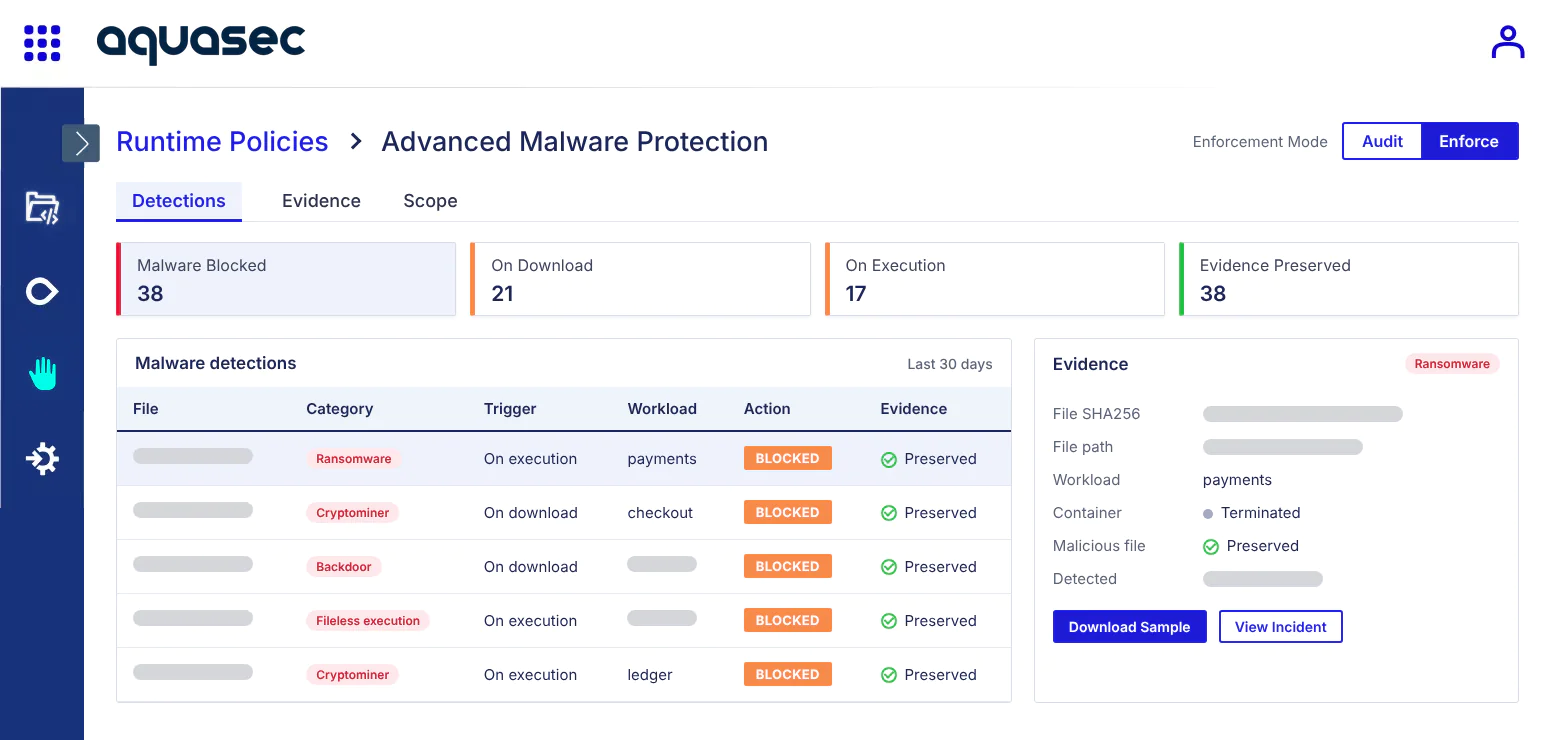
Stop ransomware, cryptominers, backdoors and supported fileless techniques in running workloads with Advanced Malware Protection. The malicious file is preserved as evidence, even after the container that ran it is gone.
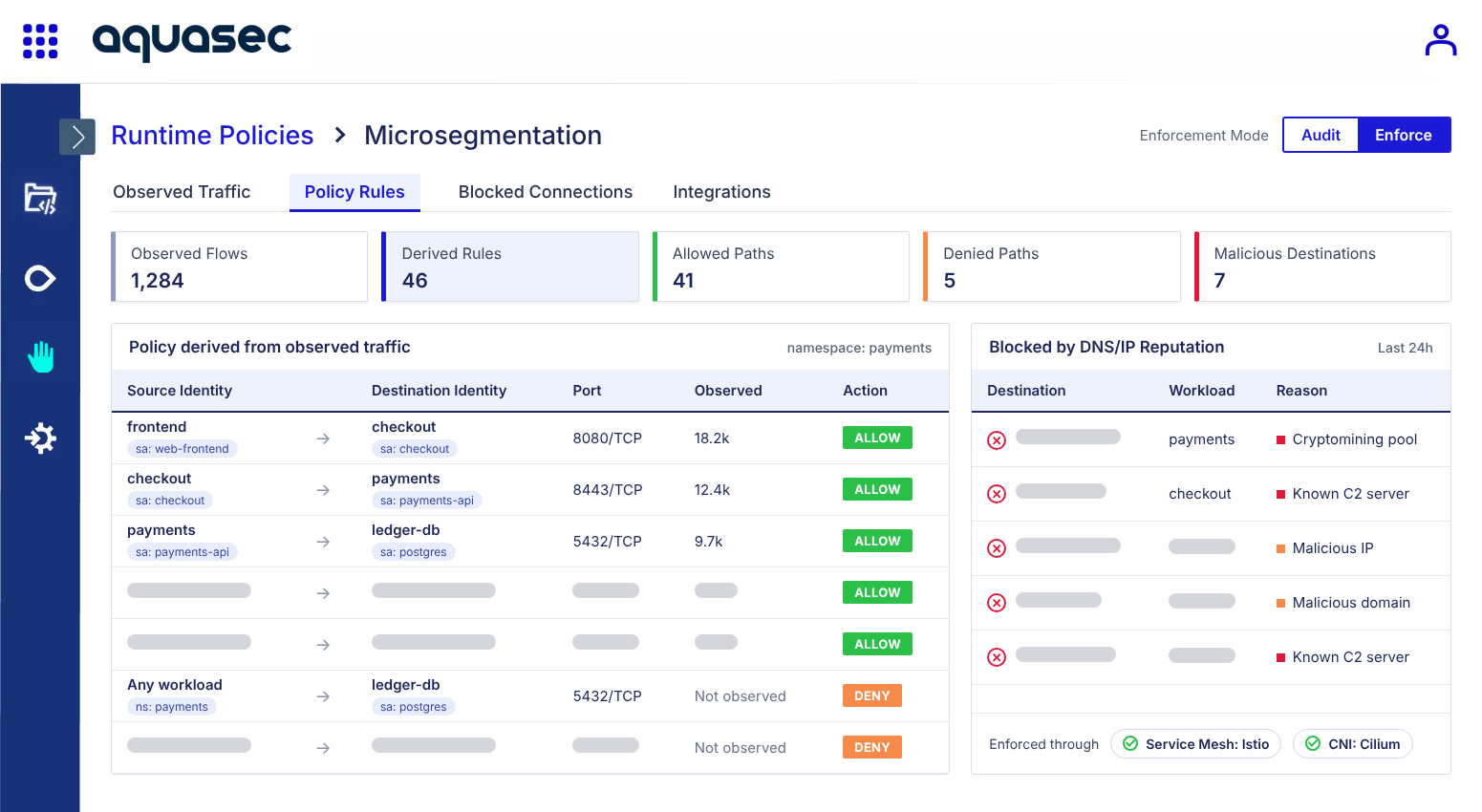
Limit lateral movement by controlling how workloads communicate. Aquasec derives microsegmentation policy from observed traffic and blocks connections to malicious DNS and IP destinations, working alongside your existing service mesh and CNI.
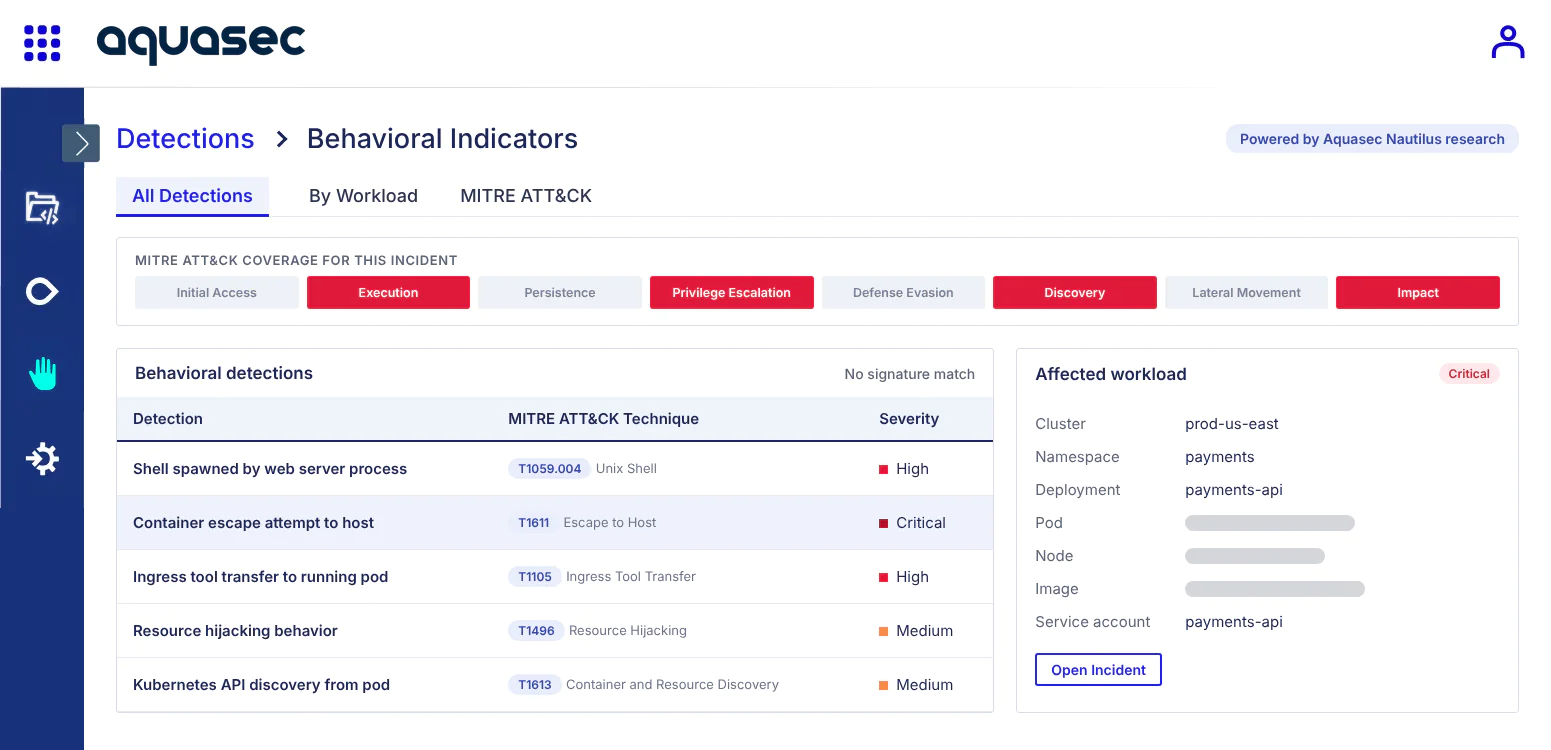
Catch new techniques and zero day activity that signature matching misses. Behavioral detections built from Aquasec Nautilus research map each finding to MITRE ATT&CK and to the affected workload and Kubernetes context.
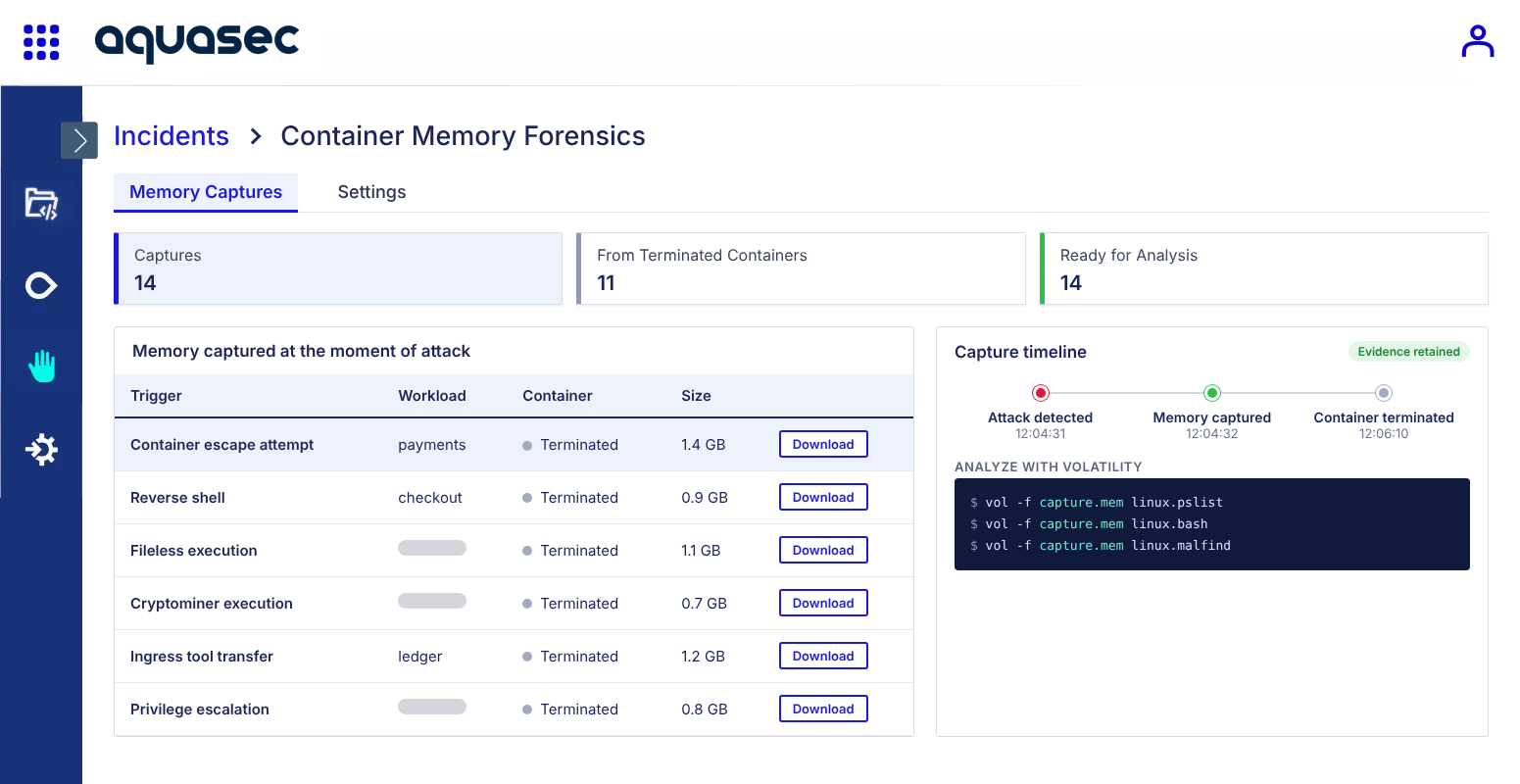
Reconstruct attacks on ephemeral workloads with forensic detail that would otherwise be lost. Container Memory Forensics captures the relevant memory at the moment of attack so responders can analyze it with familiar tools such as Volatility.
Choose SaaS or a fully self hosted deployment, including disconnected and air gapped networks. The Aqua Enforcer makes policy decisions locally, so protection does not depend on a connection to the cloud.
 Tanzu Application Service
Protect applications running on Tanzu Application Service across their entire lifecycle, from scanning droplet for vulnerabilities and embedded secrets, to securing app instance and Diego cells in runtime.
Learn More
 VMware Tanzu Kubernetes Grid
Protect cloud native workloads on Tanzu Kubernetes Grid with full lifecycle security controls, including image scanning, secrets management, and runtime security at scale.
Learn More
 AWS Lambda
Protect AWS Lambda Functions, with risk assessment by the discovery of over-provisioned permissions and roles, embedded access credentials, keys and vulnerabilities.
Learn More
 AWS Fargate
Secure Applications running on AWS Fargate, with the Aqua MicroEnforcer embedded in the containers to ensure that workloads perform their intended function, and detect vulnerable or compromised containers.
Learn More
 Red Hat OpenShift
Protect cloud native workloads on Red Hat OpenShift with full lifecycle security controls that include image scanning, secrets management, and runtime security at scale.
Learn More
 IBM LinuxONE and IBM Z
Ensure the highest security levels for IBM LinuxONE and IBM Z with Aqua’s leading container and Kubernetes security controls from development to production. Address vulnerabilities, enforce policies, and enable runtime protection to ensure robust security and compliance.
Learn More
 Splunk
The Splunk integration brings cloud native security data into the Splunk dashboard, allowing holistic monitoring in real-time, better contextual analysis, ability to view analyze blocked events, identification of attacks and suspicious activity and accurate forensics, alerts of any security compliance violations, and more.
Learn More
 Rancher
Protect cloud native workloads on Rancher with full lifecycle security controls that include image scanning, secrets management, and runtime security at scale.
 Microsoft Azure
Protect cloud native workloads running on Azure from development to production, including Azure Container Service (AKS), Azure Container Instances (ACI) and Azure Functions.
Learn More
 VMware vSphere Kubernetes Service (VKS)
Aqua secures the software supply chain, detects, prioritizes and reduce risks, and stops run-time attacks for applications built and deployed on VMware VKS with a comprehensive cloud native security platform.
Learn More
Runtime security protects applications and workloads while they execute in production. It covers monitoring workload behavior, detecting malicious activity, enforcing policy inline and containing threats. Aquasec delivers runtime security through the Aquasec Enforcer, which operates inside each workload at the kernel layer and can deny supported unauthorized actions at the point of execution.
Runtime Security provides the capabilities analysts group under cloud workload protection platforms, or CWPP, across containers, Kubernetes, virtual machines and supported serverless workloads. Aquasec’s focus goes beyond workload visibility to inline enforcement at the kernel layer, so policy can deny a supported unauthorized action instead of reporting it after it runs.
An eBPF sensor can provide deep telemetry, but observing an action and reporting it to a control plane does not stop it from completing. The Aquasec Enforcer operates inside the workload at the kernel layer, where it evaluates process, file, network and privilege activity and can deny a supported unauthorized action at the point of execution. Aquasec uses eBPF as one part of that architecture, alongside other operating system and runtime mechanisms.
No. Runtime policy decisions are enforced locally by the Aquasec Enforcer, so protection continues in disconnected and air gapped environments. Management and update workflows still depend on the deployment architecture you choose.
Aquasec denies the specific unauthorized process, file operation, network connection or privilege action rather than making workload termination the default response. Teams can start in audit mode, validate how workloads behave and move each workload group to enforcement once the policy is confirmed.
See runtime control stop an attack the moment it tries to execute.