Policies Don’t Work Without Enforcement
Deployment policies can define what should never ship, but without automated gates, vulnerable, malicious or noncompliant artifacts can continue toward production.
Scanning and detection can reveal risk, but neither prevents an unsafe artifact from reaching production nor denies a malicious action when it attempts to execute. Without enforcement in the path, security policy remains guidance rather than control.
Deployment policies can define what should never ship, but without automated gates, vulnerable, malicious or noncompliant artifacts can continue toward production.
Attacks can execute in seconds, making delayed detection and manual response too slow to stop malicious activity before it runs.
Vulnerable workloads remain exposed while a patch is tested, approved and deployed, leaving attackers time to exploit the weakness before remediation reaches production.
Enforce security decisions where applications are deployed and where actions execute, preventing unsafe code from shipping and malicious activity from running.
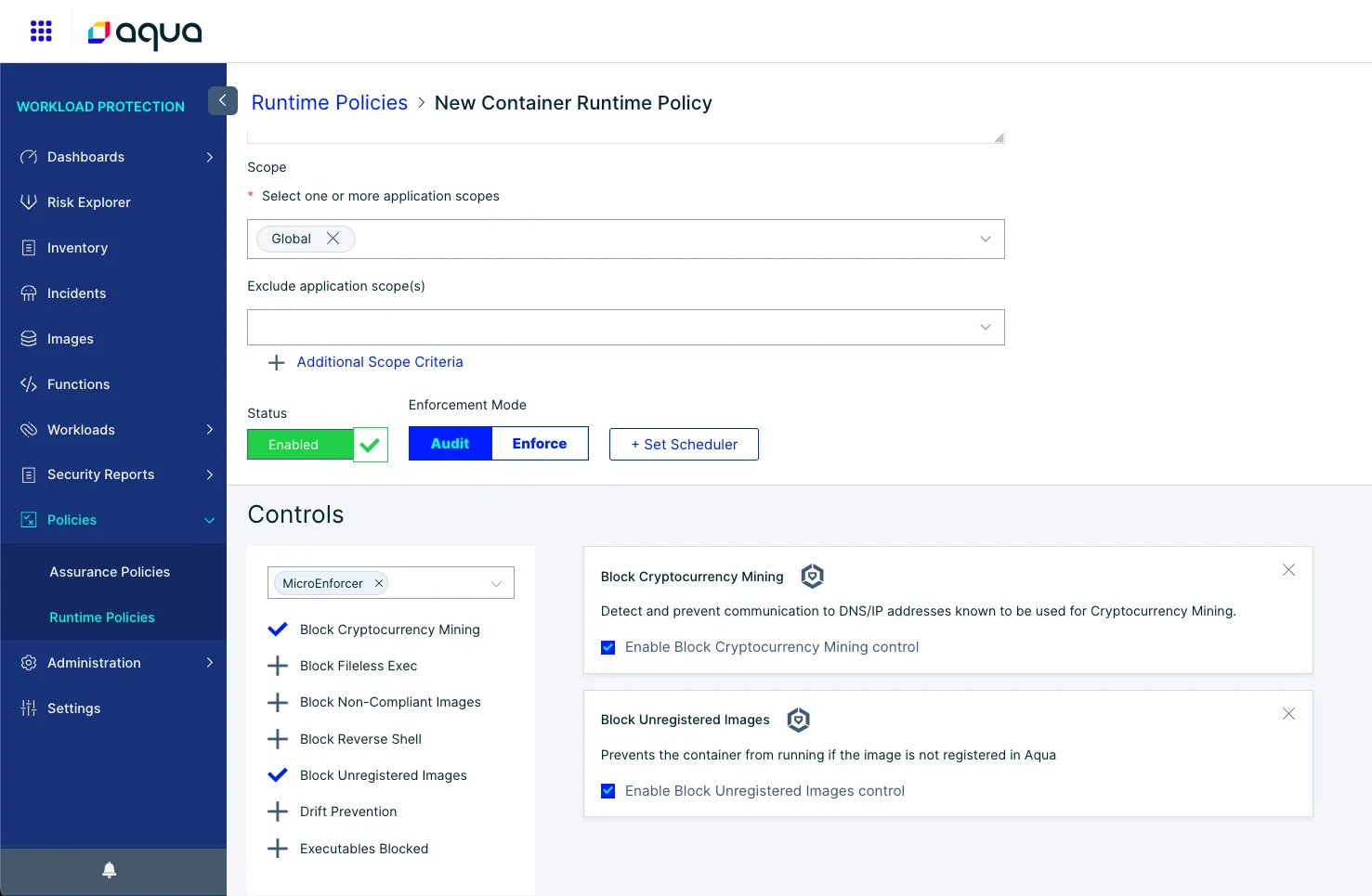
Prevent vulnerable, malicious or noncompliant artifacts from progressing through the pipeline and reaching production.
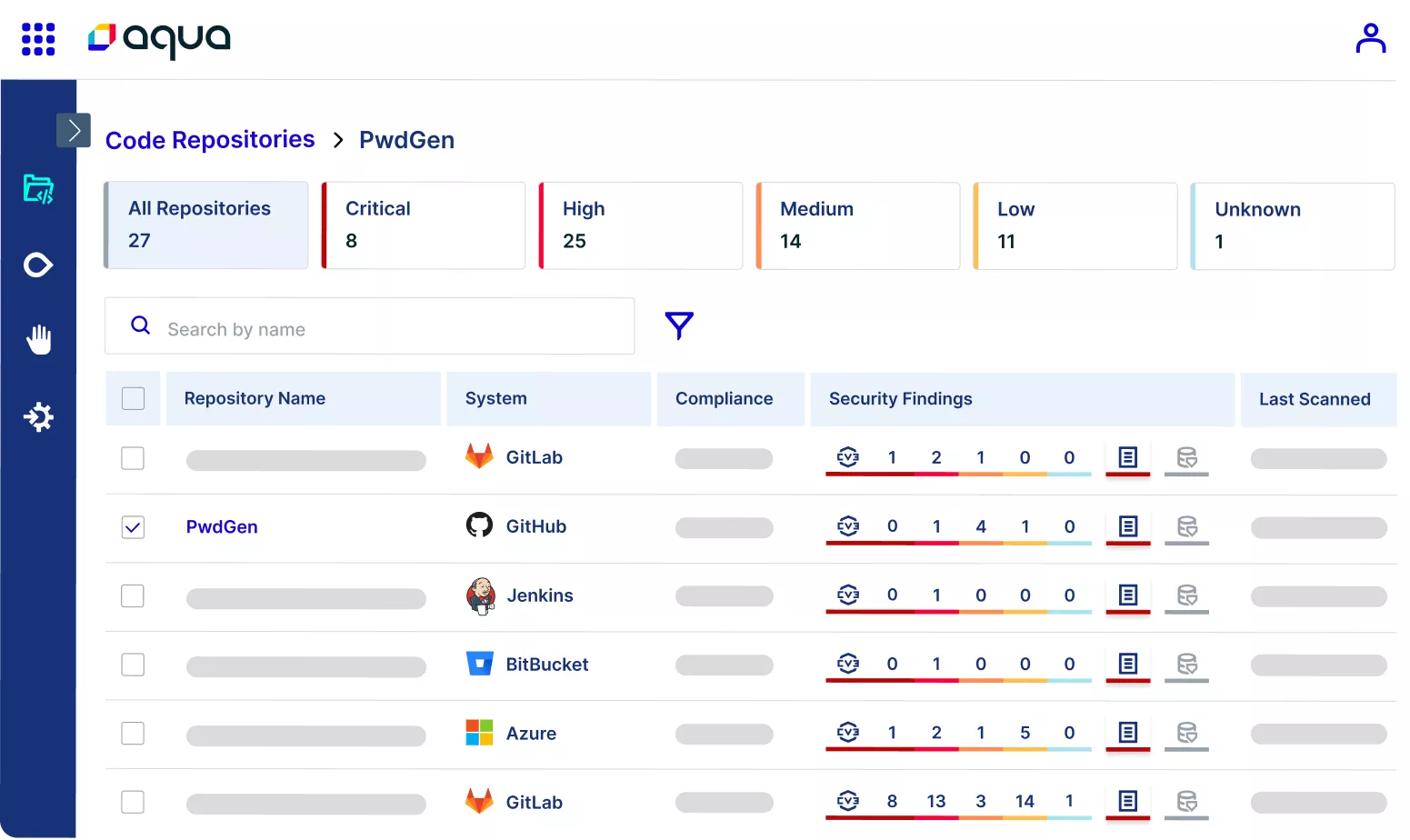
Define maximum risk thresholds and automatically stop deployments that exceed them, turning policy into a control every application must pass.
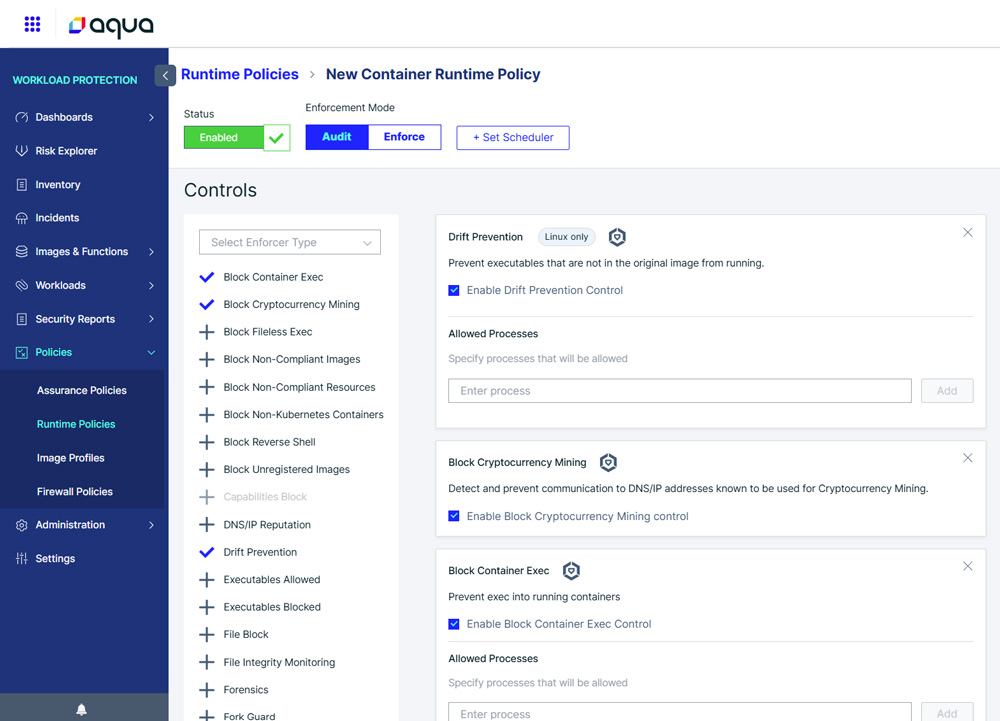
Stop unauthorized activity at the kernel boundary layer before it can execute, without killing the container.
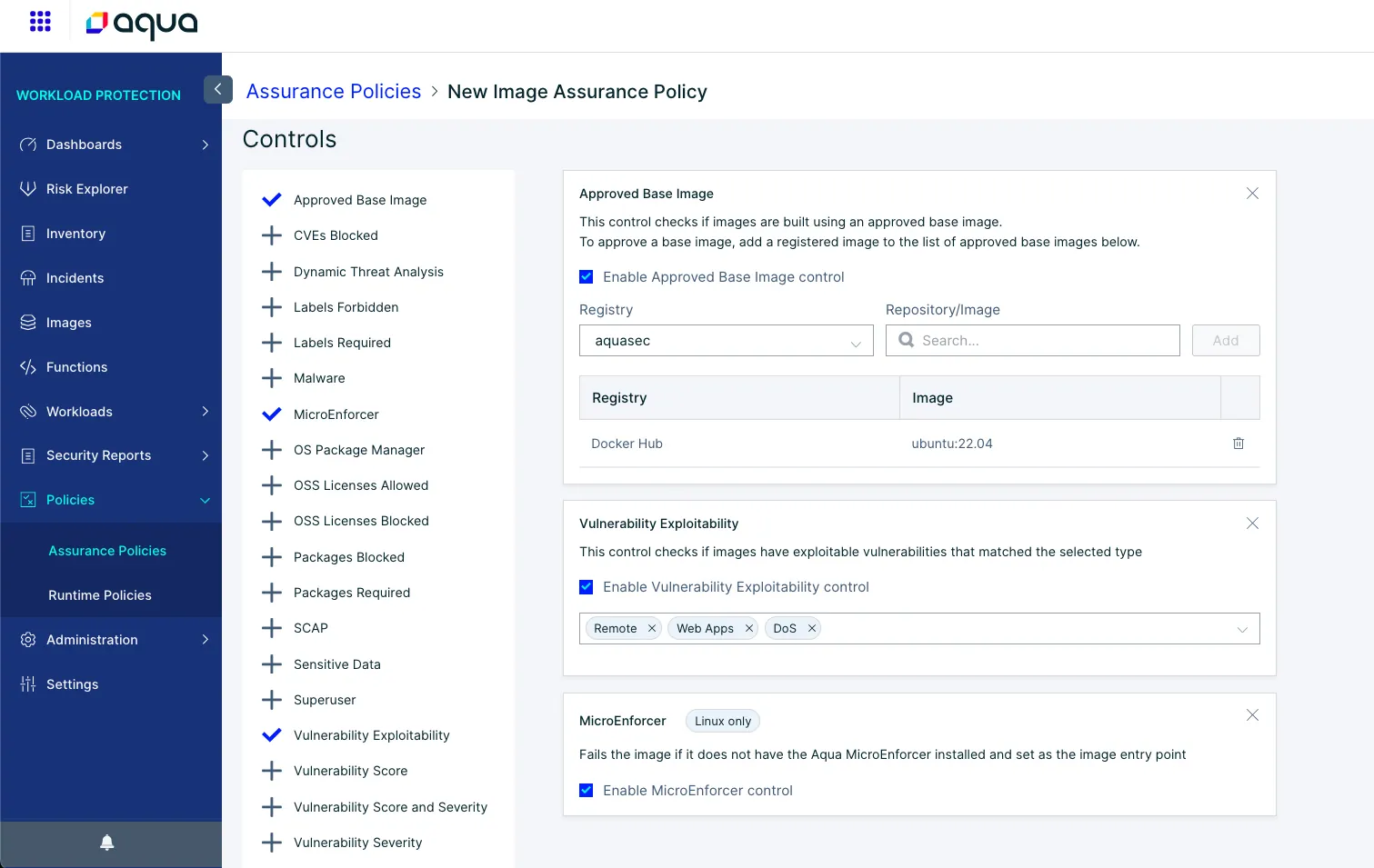
Apply compensating controls at runtime to prevent exploitation of vulnerable components without changing the image, modifying code or waiting for developer remediation.
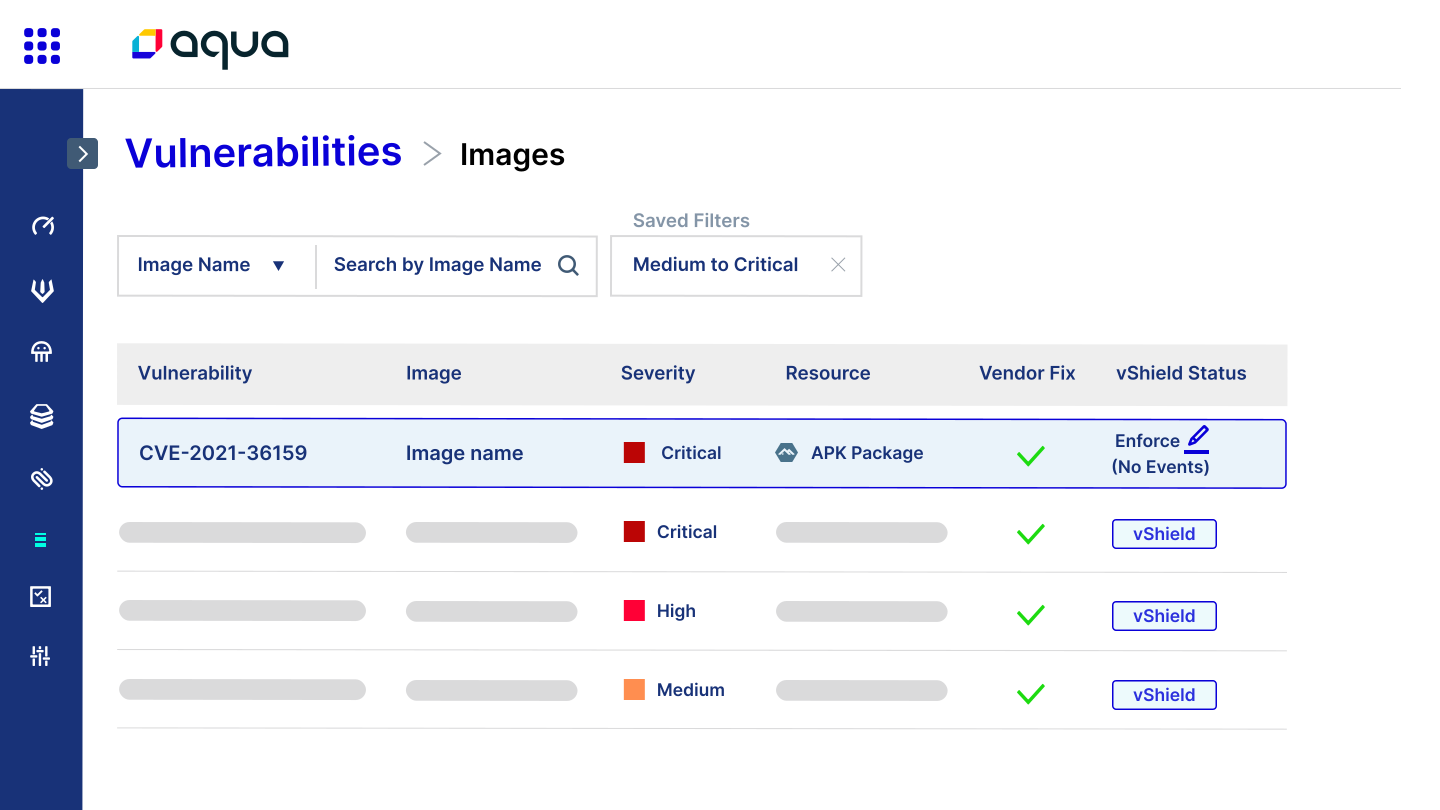
Enforcing policy inline means automatically blocking or denying an action in real time rather than only flagging it for someone to review later. Aqua applies this at deployment gates and at the point of execution inside running workloads.
Yes. Aqua can set maximum risk thresholds and automatically block any deployment that exceeds them, stopping vulnerable, malicious or noncompliant artifacts from progressing through the pipeline.
Aqua applies policy at the kernel layer to deny unauthorized actions before they can execute. This stops the malicious activity without terminating the container or disrupting the entire application.
Virtual patching means blocking exploitation of a known vulnerability without changing the underlying code. Aqua applies compensating controls at runtime that stop exploitation of vulnerable components without modifying the image or waiting for developer remediation.
Yes. Because Aqua’s enforcement runs locally inside the workload rather than depending on a live connection to the cloud, protection holds even when an environment is disconnected or air gapped.
See runtime control stop an attack the moment it tries to execute.