Vulnerability Noise Hides Real Risk
Severity scores show what could be dangerous, but not whether vulnerable code is reachable, executing or likely to be exploited.
Security teams have no shortage of findings and alerts. The challenge is determining which vulnerabilities create real exposure, which behaviors indicate an active attack and where unapproved AI use introduces new risk.
Severity scores show what could be dangerous, but not whether vulnerable code is reachable, executing or likely to be exploited.
Scans and signatures can identify known risk, but sophisticated attacks and zero days require behavioral context from the running workload.
Models, platforms and AI services can be introduced across applications faster than security teams can identify and assess them.
Correlate application context from code and images with live workload behavior and threat intelligence, helping teams focus on real exposure and detect attacks as they unfold.
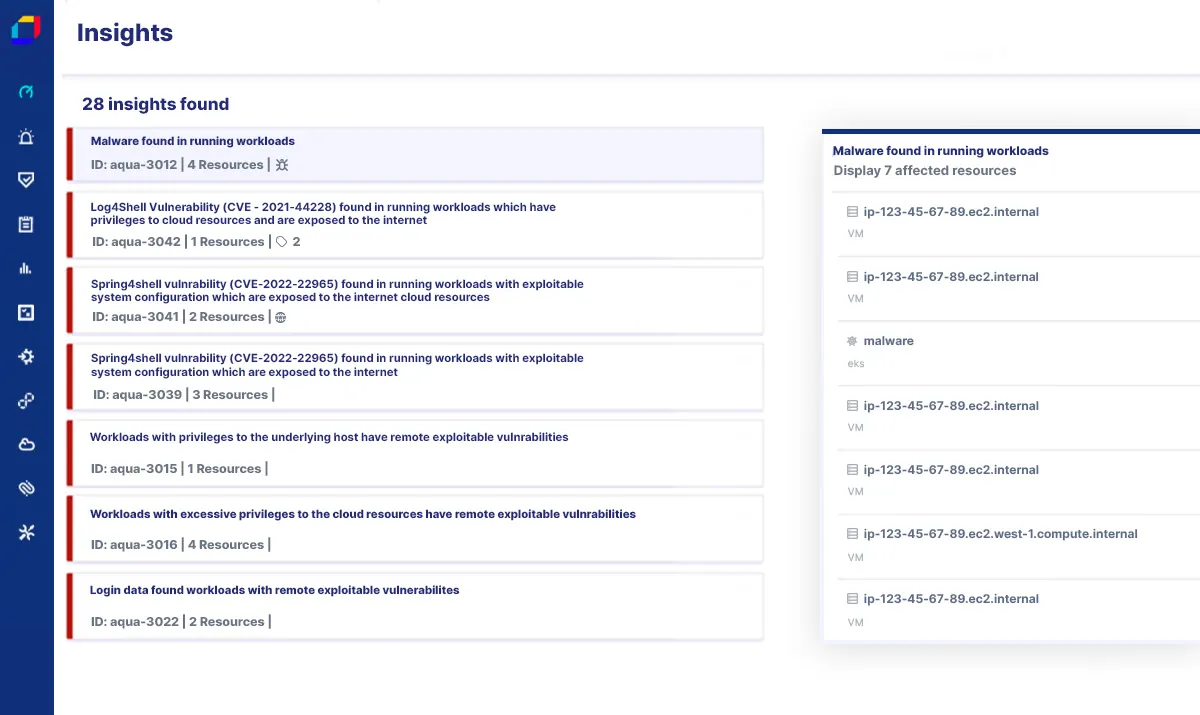
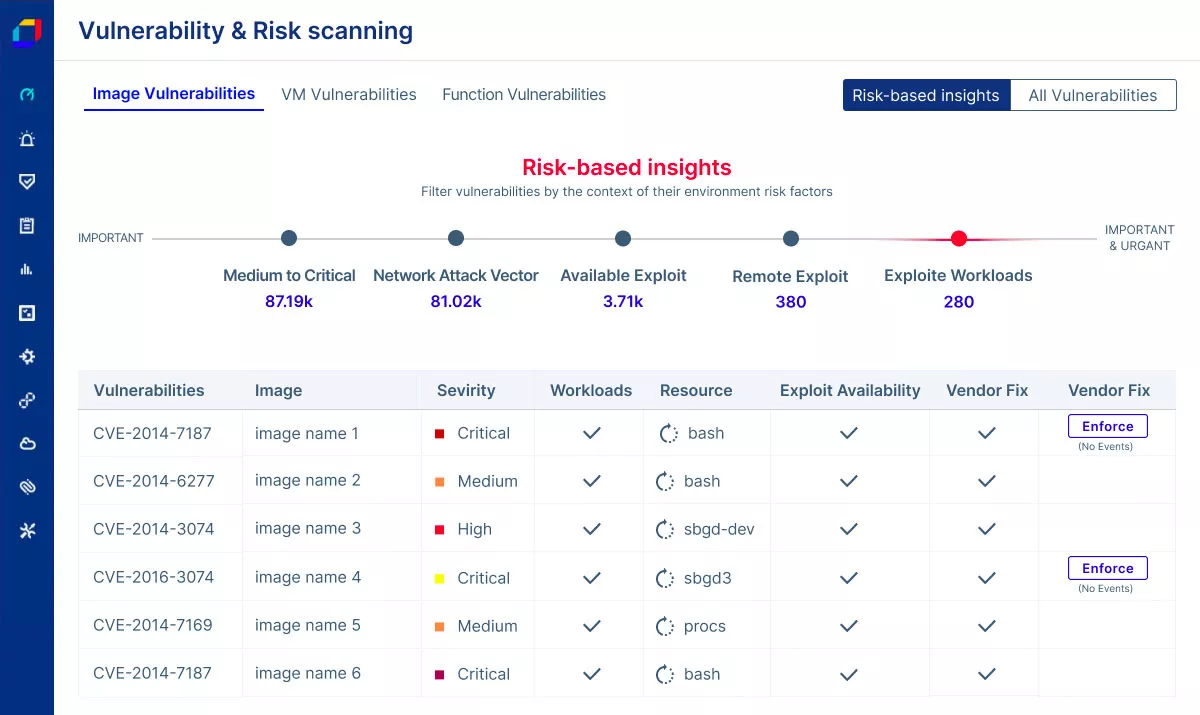
Focus remediation on vulnerabilities with real exposure by combining reachability, EPSS scores and evidence of active exploitation.
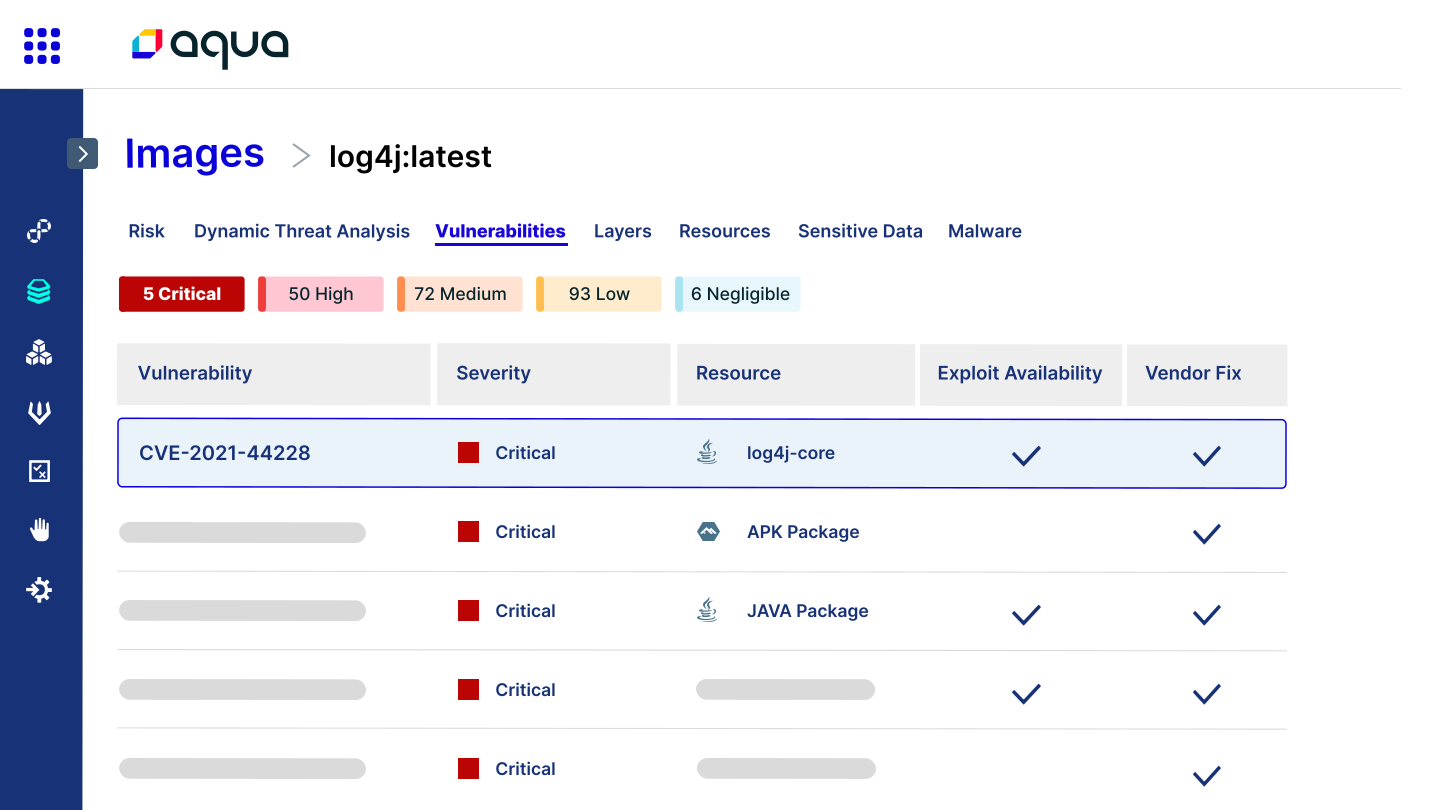
Surface deviations and behavioral indicators by analyzing process, file, network and memory activity inside running workloads.
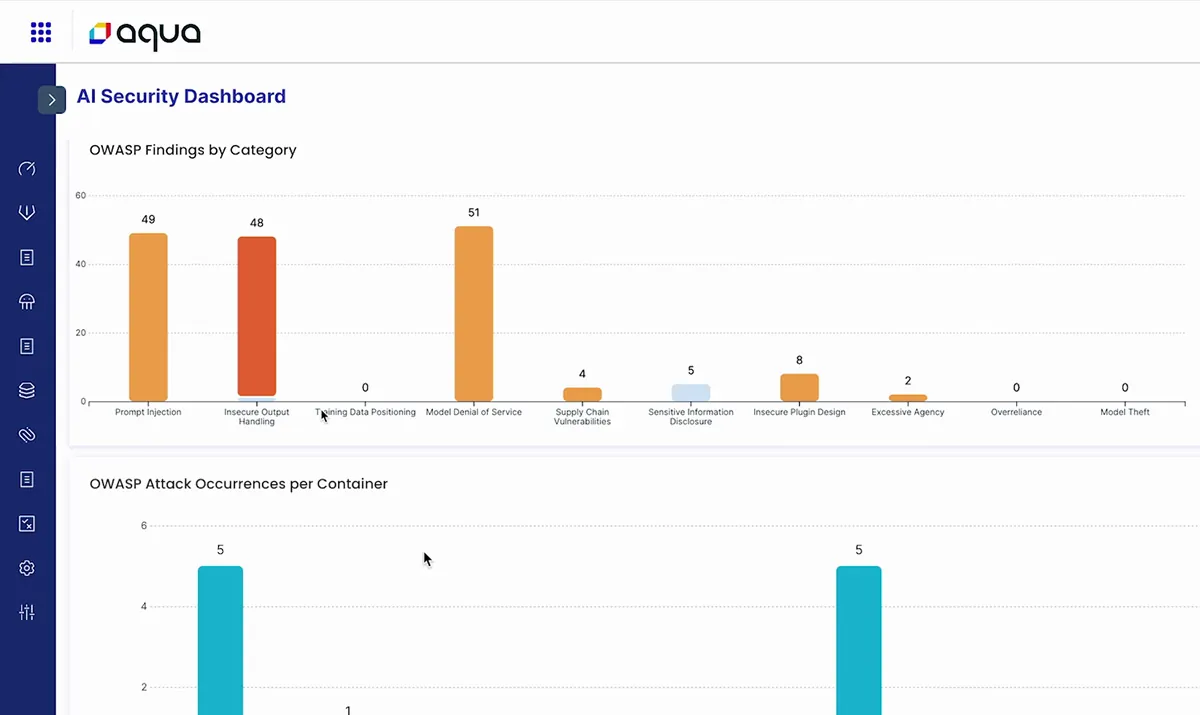
Gain visibility into unapproved models, AI services and usage patterns that expose sensitive data, violate policy or introduce risk.
Recognize malicious activity through behavioral indicators and live threat intelligence without relying on known vulnerabilities, malware signatures or attack patterns.
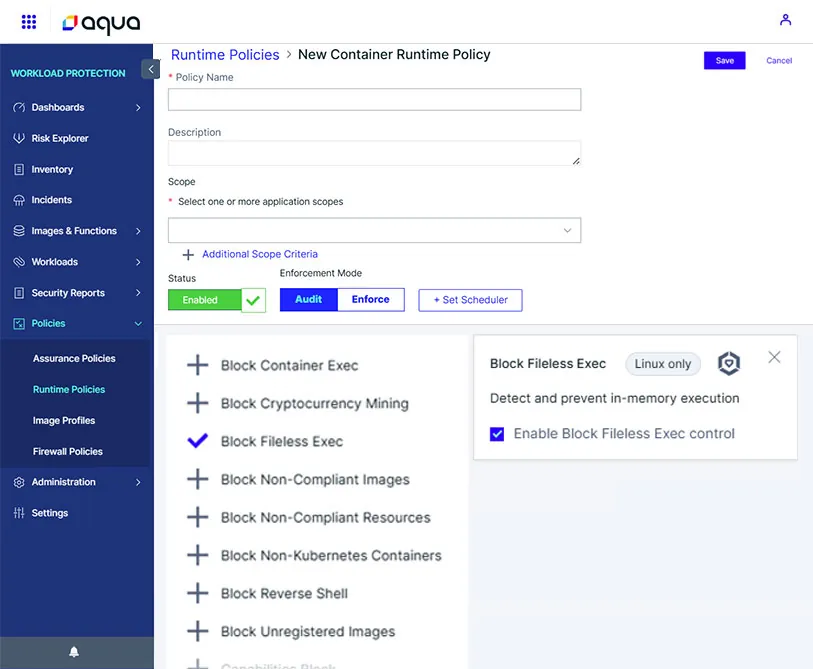
Runtime threat detection means identifying malicious or anomalous activity inside a workload while it is running, rather than only scanning it before deployment. Aqua compares live process, file, network and memory behavior against an established baseline for that workload.
A severity score rates a vulnerability in isolation. Prioritization by reachability and EPSS also considers whether the vulnerable code path is reachable in a running workload and whether it is being actively exploited, so teams fix what matters first.
Yes. Aqua uses behavioral indicators and live threat intelligence to surface attacks that don’t match a known signature, including zero days and novel techniques that signature based tools miss entirely.
Aqua identifies which AI models, platforms and versions are running across environments, then flags usage that falls outside approved policy, including AI adopted inside applications without security team visibility.
Aqua connects findings from code and images with evidence from running workloads. This helps teams understand whether vulnerable components are reachable or executing and whether runtime behavior indicates that risk is becoming active.
See runtime control stop an attack the moment it tries to execute.